
Implementing End-to-End Traceability in Agricultural Supply Chains
In modern international food trade, product origin transparency is no longer merely a marketing advantage it is a non-negotiable operational requirement. Throughout my tenure leading STOXXNOW EXPORTS & IMPORTS PVT LTD, I have observed a profound shift in how corporate buyers, state regulatory agencies, and end consumers evaluate agricultural imports. Stakeholders are no longer satisfied with vague assertions regarding product quality or organic claims; they require granular, verifiable evidence tracing every shipment directly back to its cultivation plot.
Implementing a comprehensive, end-to-end traceability architecture across complex agricultural supply chains presents significant operational challenges. When handling commodities like pulses, millets, spices, and fresh vegetables sourced across rural farm clusters, data collection must be continuous, tamper-proof, and seamless. In this article, I will unpack the structural frameworks, digital tagging methodologies, and quality control protocols we deploy to maintain complete transparency from farm harvest to international destination ports.
1. The Evolution from Paper Ledgers to Digital Traceability
Historically, bulk agricultural supply chains were characterized by high opacity. Harvests from hundreds of smallholder farms were routinely aggregated at regional collection centers without batch separation. Grains, seeds, or legumes were mixed, cleaned, and packed into unlabelled woven sacks, effectively erasing all unique origin data prior to processing or ocean shipment.
While this legacy model minimized initial handling logistics, it created severe vulnerabilities for international trade:
- Inability to Isolate Contamination Events: If a target country detected excess pesticide residues or aflatoxin spikes in a container arrival, exporters had to recall entire multi-container shipments rather than isolating the single affected farm batch.
- Vulnerability to Counterfeit and Mixing Practices: Premium organic grains were easily diluted with conventional yields during intermediate handling steps.
- Auditing Friction with Port Authorities: Customs agencies faced prolonged manual verification processes, triggering extended vessel holds and severe demurrage costs.
Over the past decade, regulatory tightening and consumer demand for ethical sourcing have forced a structural evolution. Moving from fragmented paper-based ledgers to integrated digital workflows has become a baseline survival strategy for export enterprises. Digital frameworks substitute manual guesswork with cryptographic verification, ensuring that every bag of agricultural produce carries an immutable digital shadow reflecting its journey.
Field Perspective by the STOXXNOW Export Team: "Traceability is ultimately an exercise in risk mitigation and trust architecture. When an overseas importer can scan a QR code on a bulk shipment bag and immediately inspect soil analysis certificates, harvest dates, and processing timestamps, commercial friction disappears."
2. Core Architectural Components of a Modern Agro-Traceability System
To establish true farm-to-port visibility, an exporter must integrate three foundational layers into their operational supply chain:
A. First-Mile Farm Tagging and Batch Creation
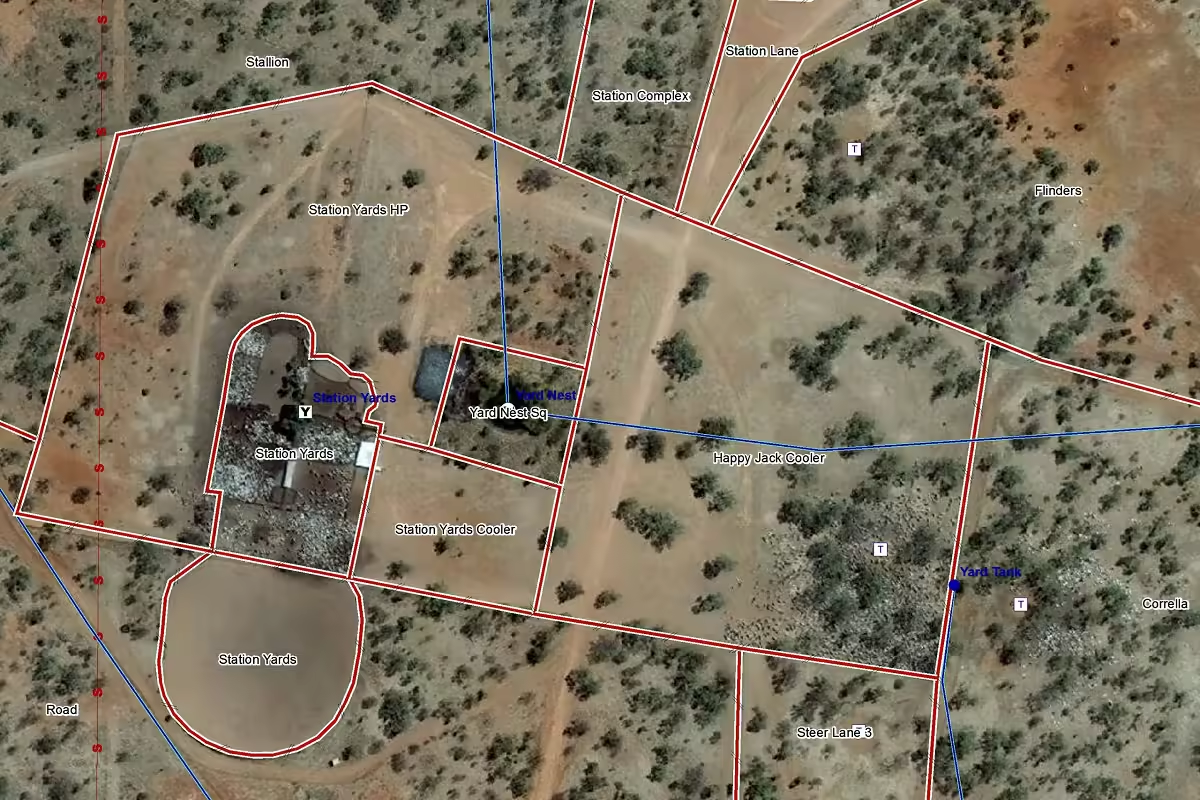
Traceability begins at the soil level. Working directly with our partner farming cooperatives, every harvest yield is assigned a unique Global Identification Number (GIN) at the point of primary collection. Digital mobile tools capture critical metadata during loading:
- Geographic GPS coordinates of the farm plot, ensuring precise geospatial mapping.
- Cultivation practices (Organic certified vs. Conventional integrated pest management), verified via field audits.
- Exact harvest date, field batch volume, and primary moisture percentage measured right at the farm gate.
By digitizing data at the point of origin, we eliminate the risk of data entry tampering downstream. Smallholder farmers are equipped with localized mobile applications or interact through agricultural extension officers who input harvest parameters directly into our centralized enterprise resource planning (ERP) system.
B. Processing Facility Isolation and Lot Tracking
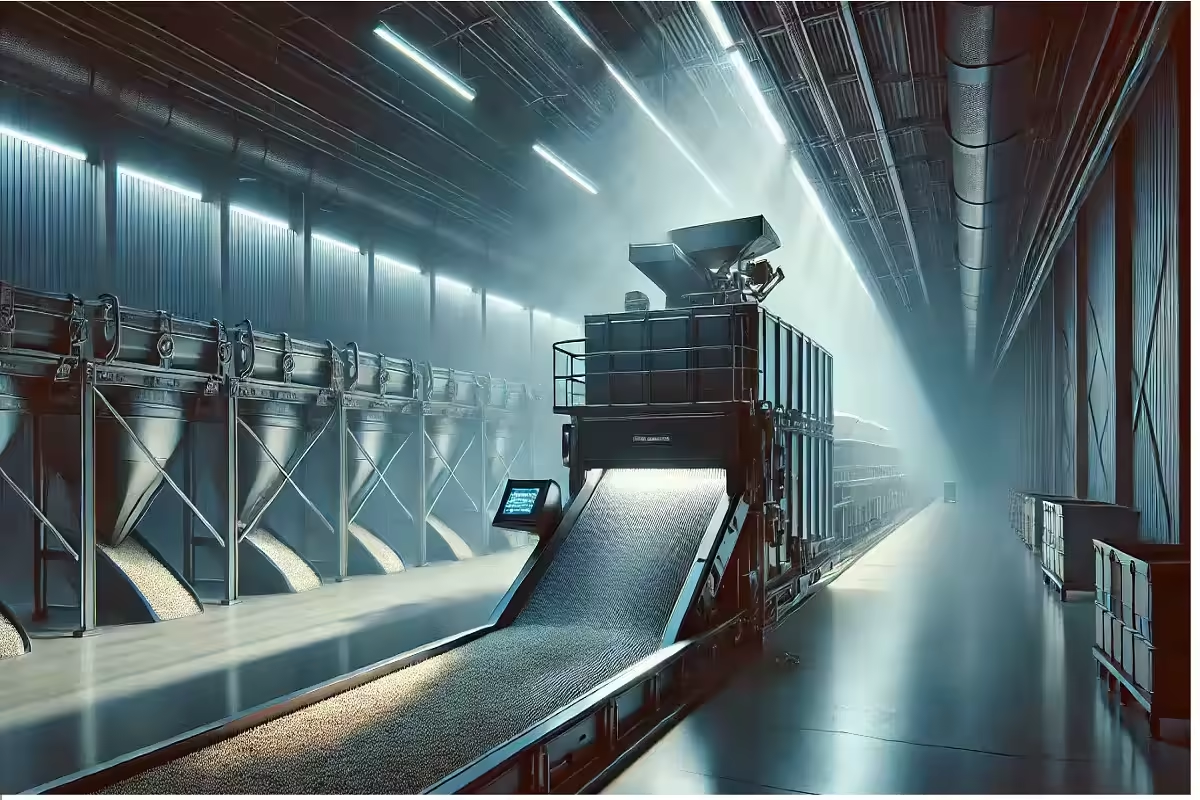
Once raw commodities arrive at centralized processing facilities, batch integrity must be preserved. Advanced cleaning, color-sorting, and grading lines operate under automated Warehouse Management Systems (WMS). Rather than commingling batches, yields pass through segregated processing lines. Digital barcode labels are affixed to inner bulk bags (such as 25kg/50kg PP bags or 1-ton Jumbo FIBC totes), linking finished packaging directly back to primary farm procurement batches.
During cleaning and milling, automated diversion valves and purge cycles prevent cross-contamination between organic and conventional lines. Each transformed lot receives a sub-batch identifier that inherits the historical attributes of its parent batches while appending processing parameters such as milling date, final moisture content, and packaging specifications.
C. Cold Chain Telemetry and Maritime Transit Logging
For perishable items and humidity-sensitive grains, transit monitoring is vital. We utilize IoT-enabled sensor pods inside shipping containers to log real-time internal relative humidity, ambient temperatures, and door-opening events during sea voyages. This environmental data is continuously synced to cloud dashboards, ensuring that any thermal variation is flagged immediately.
Maritime logistics introduce complex variables from extended dwell times at transshipment ports to extreme temperature fluctuations across tropical maritime routes. Real-time telemetry ensures that if a container experiences excessive condensation risk, our quality assurance team can coordinate with port agents for immediate aeration or expedited customs clearance upon arrival.
3. Data Integration, IoT, and Blockchain Implementations
The backbone of any robust traceability model is data interoperability. Agricultural supply chains involve disparate stakeholders farmers, transporters, warehouse operators, customs brokers, testing laboratories, and marine insurers. Bridging these entities requires an open API architecture capable of ingesting diverse data formats.
At STOXXNOW, we leverage cloud-native database structures combined with permissioned distributed ledger technology (DLT) where appropriate. Blockchain integration ensures that once a batch milestone is recorded such as a phytosanitary certificate issuance or a port arrival timestamp it cannot be altered retroactively by any single party. This immutability builds absolute confidence among international regulatory auditors who demand tamper-evident historical trails.
| Supply Chain Stage | Primary Technology Used | Key Data Captured |
|---|---|---|
| Farm & Harvest | Mobile ERP & GPS Mapping | Farmer ID, GPS Coordinates, Harvest Date, Moisture % |
| Aggregation & Transport | RFID & GPS Fleet Trackers | Vehicle ID, Route Telemetry, Transit Duration |
| Processing & Grading | Automated WMS & Barcoding | Batch Separation, Milling Yields, Lab Test Results |
| Port Export & Maritime | IoT Sensor Pods & EDI Customs | Container Temp/Humidity, Bill of Lading, Phytosanitary Certs |
4. Navigating International Regulatory and Retail Compliance
Comprehensive traceability directly enhances regulatory compliance across international markets. Modern food safety legislation such as the U.S. FDA Food Safety Modernization Act (FSMA) Section 204 and European Union General Food Law requirements mandates rapid, verifiable tracking for high risk food items.
When our shipments clear customs in destination ports across Europe, the Middle East, or Southeast Asia, having structured digital documentation reduces port clearance times from days to hours. Quarantine officials can instantly verify:
- Authorized Phytosanitary and Fumigation Certificates tied to specific lot numbers.
- Accredited laboratory heavy-metal and chemical residue test sheets.
- Non-GMO certifications and organic chain-of-custody logs.
Furthermore, major supermarket chains and food conglomerates enforce strict supplier codes of conduct. Exporters who cannot provide immediate digital documentation face severe financial penalties, listing suspensions, or outright contract terminations. Investing in end-to-end transparency thus serves as a powerful market-access tool that differentiates compliant exporters from legacy commodity traders.
5. Overcoming Operational Implementation Challenges
Despite its clear benefits, deploying an end-to-end traceability ecosystem is not without hurdles. Organizations embarking on digital transformation often encounter three major bottlenecks:
A. Digital Literacy at the Farming Level
Smallholder farmers in rural agricultural clusters may lack familiarity with sophisticated mobile applications or digital data entry. Overcoming this requires investing heavily in local training programs, simplifying user interfaces into regional languages, and establishing community level collection kiosks managed by trained extension workers.
B. System Interoperability Across Jurisdictions
Different trading partners and port authorities rely on disparate software platforms. Building middleware bridges that translate internal ERP records into standardized electronic data interchange (EDI) formats such as UN/CEFACT XML standards is critical to ensuring seamless cross border communication without manual data re entry errors.
C. Cost Management and ROI Realization
Implementing IoT sensors, unique barcode labelling, and cloud infrastructure incurs upfront capital expenditure. However, when measured against the cost of cargo rejections, port demurrage fees, and insurance claims, the long-term return on investment is overwhelmingly positive. Efficiency gains and reduced dispute resolution times quickly offset initial deployment expenses.
Related Reading: Cross-border ocean transit involves logistics risks. Proper freight insurance, reliable shipping lines, and container tracking help secure shipments .
Preparing phytosanitary certificates, origin declarations, and bills of lading in advance helps prevent costly container holds at customs checkpoints .
6. Commercial Benefits: Transforming Logistics into Brand Value
Beyond satisfying regulatory mandates, implementing strict supply chain traceability delivers substantial commercial benefits. International wholesale buyers and supermarket chains are willing to pay a premium for commodities backed by verifiable origin records. It protects corporate reputation, eliminates product substitution risks, and fosters deep, long-term trade partnerships.
Consumers today increasingly scan product packaging using their smartphones to inspect the sustainability metrics and fair-trade credentials of their food. By embedding rich storytelling and verifiable origin data into our export packaging, we help our B2B clients connect rural farming communities directly to conscious global consumers.
At STOXXNOW EXPORTS & IMPORTS PVT LTD, under my personal leadership, we remain dedicated to refining our quality assurance processes. By embracing digital data logging, transparent farming partnerships, and rigorous port compliance protocols, we deliver agricultural yields that consistently exceed international expectations.