
Navigating the Logistics of Fresh Vegetable Exporting: Cold Chains, Controlled Atmosphere, and Customs Synchronization
Exporting fresh vegetables — such as onions, tomatoes, potatoes, green chilies, okra, and leafy greens — is an operational domain where time, precise thermal management, and regulatory synchronization dictate commercial survival. Unlike non-perishable dry commodities like grains or pulses, fresh horticultural produce remains biologically active long after harvest. Cut off from the parent plant, these living plant tissues continue physiological functions, primarily respiration and transpiration. Without immediate, tailored, and continuous climate controls, ambient environmental exposure triggers rapid cellular breakdown, severe moisture loss, and opportunistic fungal decay. The inevitable outcome is complete cargo devaluation and total write-offs before shipments ever arrive at international destination ports.
At STOXXNOW, our export logistics framework integrates rapid pre-cooling protocols, high-precision Controlled Atmosphere (CA) reefer container transport, robust quarantine compliance, and expedited customs clearance. Effectively managing high-stakes perishable supply chains demands deep domain expertise and absolute operational precision at every single link in the supply chain.
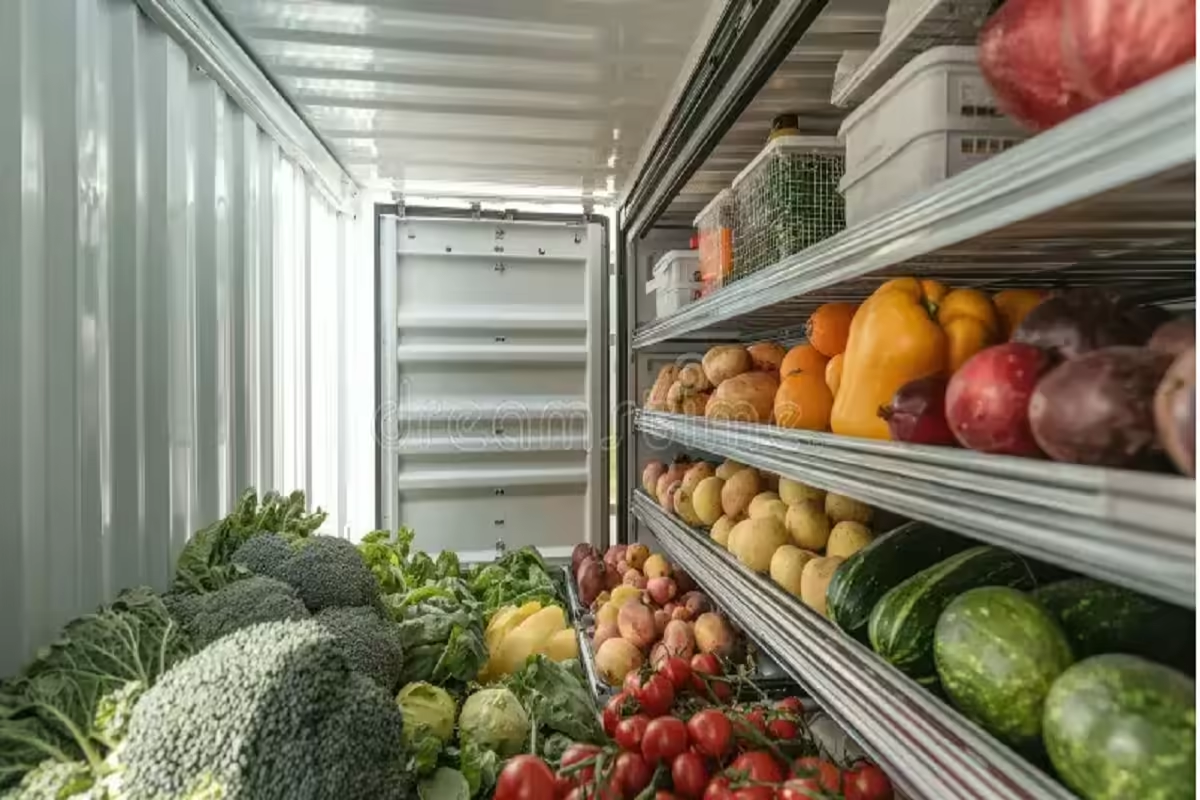 Figure 1: Temperature-controlled reefer container with automated climate monitoring system.
1. Biological Reality: Respiration, Transpiration, and the Post-Harvest Clock
Understanding horticultural post-harvest logistics requires analyzing the biological mechanisms that drive produce decay. When a vegetable is harvested, its water and nutrient supply lines are severed. However, cellular respiration persists as the vegetable consumes stored carbohydrates and oxygen (O2) to maintain cellular viability, releasing carbon dioxide (CO2), water vapor, and thermal energy (vital heat) in the process:
The Post-Harvest Respiration Equation:
C6H12O6 + 6 O2 → 6 CO2 + 6 H2O + 2,870 kJ/mol (Heat Energy)
The rate at which this metabolic process occurs varies widely across vegetable species. Leafy greens like spinach, asparagus, and broccoli exhibit extremely high respiration rates, whereas bulb crops like onions and tubers like potatoes have evolved natural dormancy mechanisms and respire much more slowly. According to van 't Hoff's law, for every 10°C increase in ambient temperature above optimal storage limits, the biological respiration rate doubles or triples (a temperature quotient Q10 of 2.0 to 3.0). Managing this metabolic acceleration is the foundational principle of professional cold chain management.
2. Rapid Hydro-Cooling and Field Heat Removal Protocols
The single most critical operational phase in fresh produce export logistics occurs immediately following farm-gate extraction. Vegetables harvested under field conditions retain "field heat" — thermal energy absorbed directly from ambient air and solar radiation. Leaving harvested crops at field temperatures for even a few hours significantly accelerates tissue degradation and shortens cumulative commercial shelf life.
| Vegetable Commodity | Optimal Temp (°C) | Target RH (%) | Primary Pre-Cooling Method | Est. Storage Life |
|---|---|---|---|---|
| Onions (Dry Bulb) | 0°C – 2°C | 65% – 70% | Forced-Air Ambient Curing | 1 to 6 Months |
| Tomatoes (Mature Green) | 12°C – 15°C | 85% – 90% | Forced-Air Cooling | 1 to 3 Weeks |
| Green Chilies / Okra | 7°C – 10°C | 90% – 95% | Room / Forced-Air Cooling | 2 to 3 Weeks |
| Leafy Greens / Spinach | 0°C – 1°C | 95% – 100% | Hydro-Cooling / Vacuum Cooling | 1 to 2 Weeks |
To interrupt rapid respiration, professional exporters implement immediate post-harvest cooling methods tailored to specific commodity characteristics:
- Hydro-Cooling: Submerging or showering non-sensitive produce (like sweet corn, celery, and radishes) with ice-cold water chilled to 0.5°C–1°C. Hydro-cooling transfers thermal energy away from crops roughly 15 times faster than static cold air, instantly lowering core temperatures to target storage levels within minutes.
- Forced-Air Pre-Cooling: Placing palletized produce inside sealed cold chambers and drawing chilled air through internal ventilation slots in packaging cartons. This method is preferred for crops susceptible to moisture-induced rot, such as tomatoes, chilies, and bell peppers.
- Vacuum Cooling: Utilizing specialized depressurized chambers to force rapid surface moisture evaporation from high-surface-area vegetables like iceberg lettuce and spinach. The evaporative cooling effect lowers core tissue temperature from 25°C to 1°C in less than 30 minutes without soaking the product.
3. Advanced Controlled Atmosphere (CA) Reefer Transport
When ocean transit schedules exceed 7 to 10 days, maintaining exact temperature levels is no longer enough to guarantee premium quality. Long-distance transoceanic routes require active Controlled Atmosphere (CA) reefer container technology to control internal gas composition throughout the journey.
Atmospheric Gas Modulation (O2 and CO2)
Standard ambient air is composed of approximately 21% Oxygen (O2), 78% Nitrogen (N2), and 0.04% Carbon Dioxide (CO2). Inside an active CA reefer container, modern automated control units continuously displace oxygen by injecting high-purity nitrogen gas, pulling internal O2 levels down to a tight range between 2% and 5%. Simultaneously, carbon dioxide levels are dynamically regulated and maintained between 3% and 10%, depending on the specific commodity requirement.
By artificially suppressing oxygen concentrations, the vegetable's cellular metabolism is placed into a reversible semi-dormant state. This reduces total sugar consumption, suppresses chlorophyll degradation (preventing yellowing in green vegetables), and extends commercial shelf life far beyond what standard refrigeration achieves.
Ethylene Scrubbing Technology
Ethylene (C2H4) is a naturally occurring gaseous plant hormone that regulates ripening and senescence. Certain produce items emit high levels of ethylene during transit, while others are extremely sensitive to it. Placing ethylene-sensitive crops like green chilies, leafy greens, or cucumbers in close proximity to ethylene-producing items accelerates tissue softening, bitter flavor development, and mold growth.
Advanced export reefer fleets utilize integrated catalytic scrubbing arrays and potassium permanganate (KMnO4) filtration units. As air recirculates inside the sealed container, ethylene molecules pass through the scrubbers and oxidize into inert water vapor and carbon dioxide, keeping ambient ethylene levels below 0.1 parts per million (ppm).
4. Risk Mitigation via Real-Time IoT Cold Chain Monitoring
Uncontrolled temperature fluctuations during transit — known as "cold chain breaks" — frequently trigger condensation on product surfaces. Free water on crop tissue creates an ideal environment for post-harvest pathogens like Botrytis cinerea (grey mold) and Rhizopus stolonifer (soft rot). Modern international shipping demands continuous visibility rather than relying on retrospective data logs retrieved after discharge.
At STOXXNOW, containerized export shipments are equipped with real-time Internet of Things (IoT) multi-sensor telemetry units. These devices continuously log and transmit key environmental metrics over satellite and cellular networks to a central monitoring portal:
- Supply and Return Air Temperatures: Precision thermistors measure supply air entering the cargo floor and return air exiting through the ceiling to catch evaporative coil freezing or airflow blockages early.
- Relative Humidity (RH) Sensors: Monitoring relative humidity levels keeps environments within optimal ranges (90%–95%), preventing moisture loss while avoiding free water condensation.
- GPS and Door Access Logging: Continuous location mapping and optical light sensor tracking instantly alert teams to unauthorized door openings at intermediate transshipment hubs.
5. Regulatory Compliance: Phytosanitary Seals and MRL Limits
Technical cold chain excellence must be backed by absolute regulatory compliance. Global agricultural border security agencies — such as the USDA-APHIS in the United States, EFSA in the European Union, and NPPO networks worldwide — enforce strict biosecurity regulations to prevent the introduction of invasive pests and diseases.
Phytosanitary Certification & Quarantine Management
Every vegetable export consignment must undergo rigorous pre-shipment inspections by certified agricultural health officers. Official Phytosanitary Certificates confirm that cargo is free from quarantine pests, such as fruit flies (Tephritidae) or leaf miners. For specific export destinations, shipments must undergo mandatory phytosanitary treatments, such as Vapour Heat Treatment (VHT) for fruit fly host plants or In-Transit Cold Treatment (maintaining core temperatures below 1.1°C for 14–18 consecutive days to eradicate insect larvae).
Maximum Residue Limits (MRL) and Chemical Compliance
Destination markets rigorously screen imported vegetables for chemical residues from pesticides, fungicides, and herbicides. Exporters must ensure that farm production partners stick strictly to Good Agricultural Practices (GAP). Analytical testing via Gas Chromatography-Mass Spectrometry (GC-MS) must be performed at accredited third-party laboratories prior to loading to guarantee that chemical residues remain strictly below destination country Maximum Residue Limits (MRLs).
Related Reading: Key Factors Influencing the International Rice Trade.
Standard Fumigation and Quarantine Procedures for Grain Cargo .
6. Expedited Customs Clearance and Digital Integration
Administrative delays at destination ocean terminals represent a major threat to fresh produce quality. Extended dwell times on hot port tarmac quickly compromise container refrigeration performance. Preventing these bottlenecks requires complete digital alignment between exporters, freight forwarders, custom brokers, and port health inspectors prior to vessel arrival.
To eliminate port clearance friction, STOXXNOW implements a streamlined customs pre-clearance workflow:
- Advance Electronic Data Interchange (EDI) Filing: Phytosanitary certificates, Certificates of Origin, commercial invoices, and packing lists are filed electronically through destination customs platforms while the transport vessel is still at sea.
- Pre-Arrival Risk Assessment: Filing entry documentation early allows border control authorities to review compliance data and assign cargo to "Green Channel" priority status prior to discharge.
- Dedicated Port Cold-Store Intermodal Transit: In cases where physical quarantine inspections are flagged, cargo is moved directly to temperature-controlled customs inspection stations (CCIS) rather than unpackaged in unconditioned ambient port yards.
The STOXXNOW Operational Standard
Exporting fresh vegetables across long international trade routes requires balancing biological requirements with industrial logistics. By pairing immediate post-harvest cooling and Controlled Atmosphere ocean reefer shipping with real-time IoT tracking and pre-filed customs clearance, STOXXNOW protects product quality from farm fields to overseas markets. Through persistent cold chain management and strict technical oversight, we ensure fresh produce delivers maximum quality and commercial value anywhere in the world.