
Analyzing the Growing Global Appetite for Authentic Indian Spices: Sourcing, Quality, and Regulatory Compliance
The international demand for authentic Indian spices—such as high-curcumin turmeric, premium cumin seeds, red chilies, and green cardamom—has reached historic highs. Driven by a global shift toward clean-label ingredients, functional nutrition, and authentic international cuisines, the international trade in spices has transformed dramatically. What was once a traditional regional commodity market is now a highly technical, multi-billion-dollar global supply chain supplying industrial food processors, cosmetic manufacturers, functional beverage formulators, and pharmaceutical laboratories worldwide.
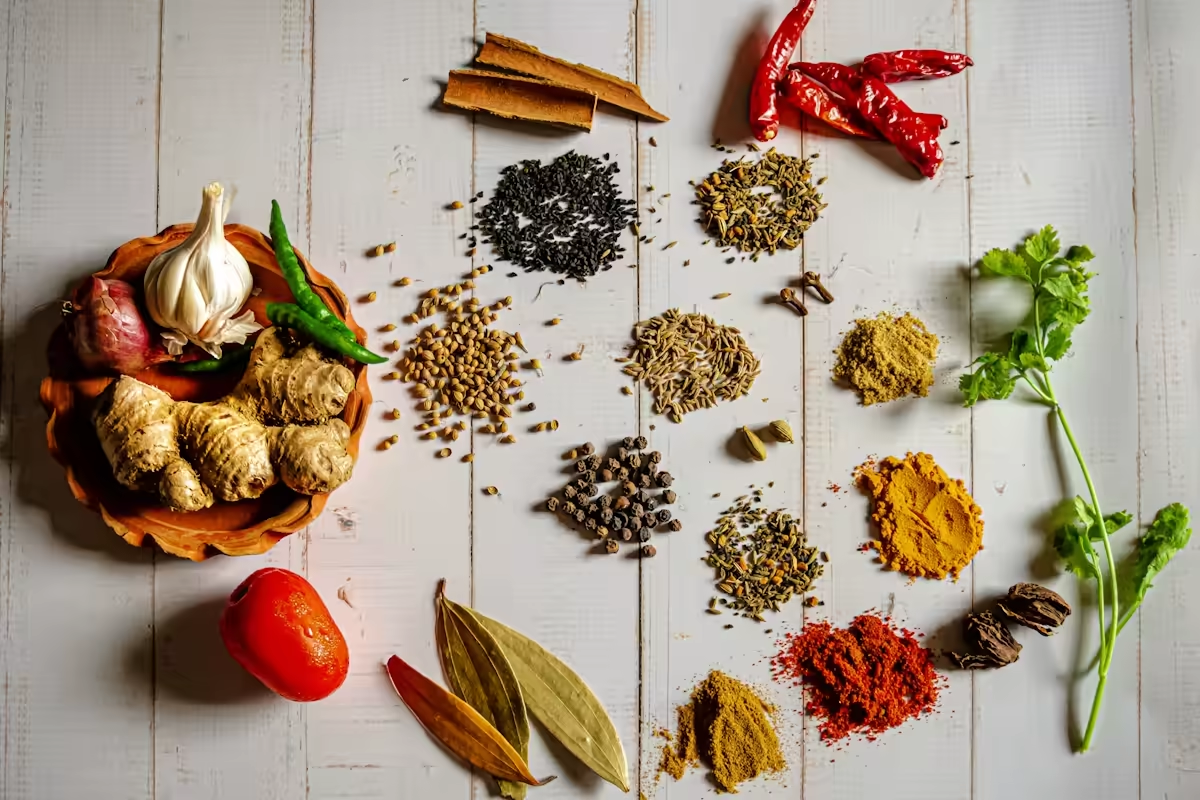
At STOXXNOW, we work directly at the intersection of farm-level sourcing, advanced processing technology, and strict international trade compliance. Navigating this expanding market requires far more than procurement; it demands scientific control over active bio-compounds, rigorous pathogen eradication, and absolute vigilance regarding chemical residue management to meet international standards across North America, Europe, and East Asia.
1. Macro-Market Dynamics: What Is Fueling Global Demand?
The global spice and seasoning market is projected to expand significantly over the coming decade, with Indian exports representing a cornerstone of international trade. Several core structural shifts explain why global food manufacturers and institutional buyers are accelerating their procurement of Indian botanical cultivars:
- The Clean Label & Natural Colorant Movement: Consumers globally are actively rejecting synthetic azo dyes (such as Allura Red or Tartrazine) in favor of natural plant extracts. High-color-value Indian paprika, capsicum oleoresins, and turmeric (curcumin) are increasingly used as direct replacements for synthetic food colors in confectionery, dairy, and meat products.
- Rise of Functional Foods & Phytopharmaceuticals: Phytochemical research highlighting the anti-inflammatory, antioxidant, and anti-microbial attributes of botanical compounds—specifically curcuminoids in Curcuma longa and piperine in Piper nigrum—has created massive industrial demand outside traditional food sectors.
- Expansion of Ready-to-Eat (RTE) & Ethnic Food Formulations: Modern urban consumer habits across Europe, North America, and the Middle East have driven major growth in convenient, authentic ethnic meals, requiring standardized spice blends with consistent flavor impact profiles.
2. Essential Oil Chemistry and Cryogenic Milling Engineering
The commercial market value of any spice shipment is defined by its volatile essential oils and active phytochemical concentrates. Key active markers include curcumin in turmeric, cuminaldehyde in cumin, piperine in black pepper, and gingerol in ginger. Traditional ambient-temperature grinding methods subject raw ingredients to friction, elevating process temperatures above 50°C to 90°C. This excessive thermal exposure leads to three major quality losses:
- Rapid evaporation of volatile mono- and sesquiterpenes, which severely weakens the spice’s aroma profile.
- Thermal degradation of delicate bioactive nutrients, lowering industrial grading levels.
- Melting of natural spice fats, causing oil bleeding, clumping, and accelerated oxidative rancidity during maritime transit.
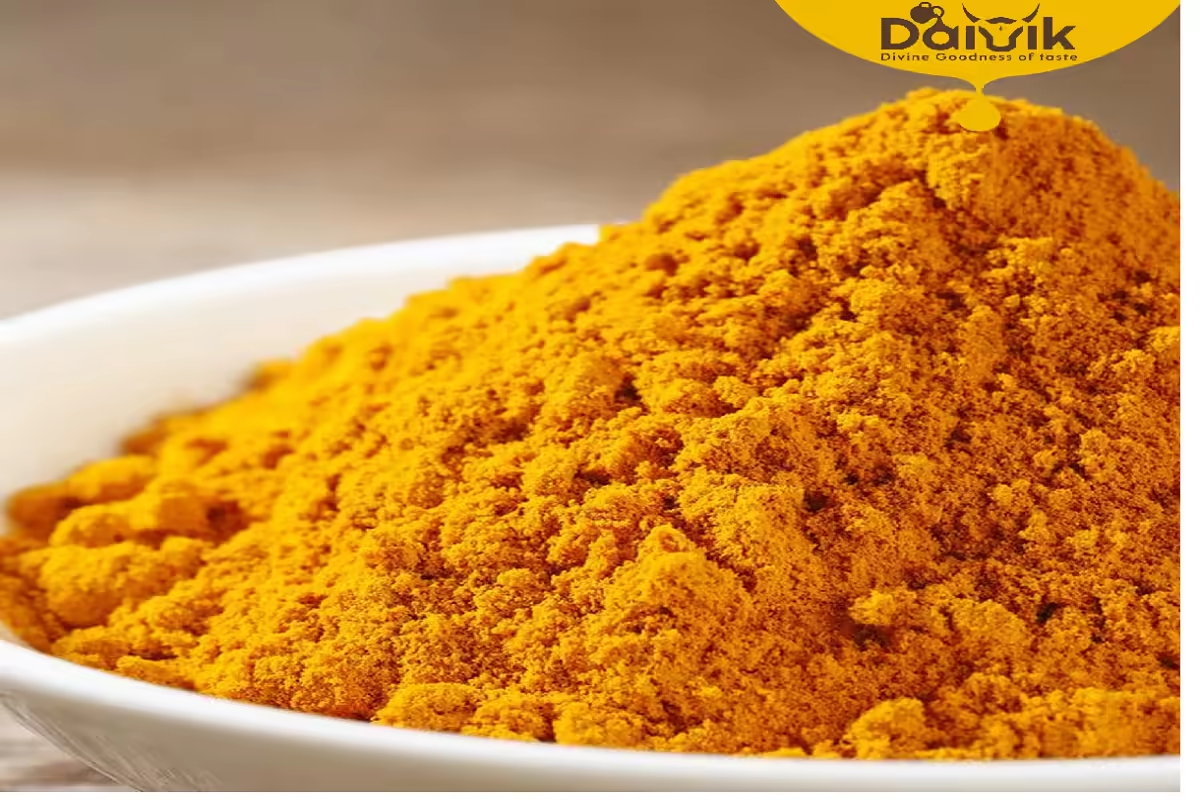
To overcome thermal degradation, STOXXNOW employs advanced Cryogenic Grinding Systems. By injecting liquid nitrogen at sub-zero temperatures (down to -196°C) directly into the milling chamber, the raw botanical matrix is rendered embrittled and ground under inert, ultra-cold conditions.
| Processing Attribute | Ambient Grinding (Conventional) | Cryogenic Grinding (STOXXNOW) |
|---|---|---|
| Milling Temperature Range | +45°C to +85°C | -40°C to -100°C |
| Volatile Oil Retention | 40% – 55% Loss | 90% – 97% Retained |
| Color Integrity (L*a*b* Value) | Dull, thermally darkened | Vibrant, original natural hue |
| Particle Size Uniformity | Uneven, higher moisture variation | Ultra-fine, highly consistent mesh |
| Oxidative Shelf Life | 6 – 9 Months | 24+ Months |
3. Microbial Decontamination and Pathogen Control Protocols
Because spices are agricultural products cultivated in open ecosystems, raw uncleaned harvests naturally carry environmental microorganisms. Import authorities worldwide—including the United States Food and Drug Administration (US FDA), the European Food Safety Authority (EFSA), and Japan’s Ministry of Health, Labour and Welfare—enforce zero-tolerance limits for pathogenic organisms such as Salmonella spp., Escherichia coli, and Listeria monocytogenes.
Historically, industry processors relied heavily on Ethylene Oxide (EtO) gas fumigation or Gamma Irradiation to sterilize raw shipments. However, stringent regulatory shifts have altered acceptable processing parameters globally:
- Ethylene Oxide (EtO) Restrictions: The European Union enforces strict maximum residue limits (MRLs) near detection limits (0.1 mg/kg) for EtO and its reaction product, 2-chloroethanol, citing potential health risks. Unregulated EtO fumigation often leads to immediate border rejections and customs destruction orders.
- Continuous High-Velocity Steam Sterilization: Modern processing utilizes short-duration, high-temperature, low-moisture dry steam under exact vacuum pressure. This method effectively achieves up to a 5-log microbial reduction in pathogen load without leaching water-soluble pigments or stripping delicate top-note aromas.
4. Advanced Chemical Purity: Eliminating Adulteration & Heavy Metals
The global spice trade faces scrutiny regarding product authenticity and chemical safety. Common issues include intentional adulteration with low-cost fillers and exposure to heavy metal contamination from environmental soil conditions.
A. Adulterant Detection Technologies
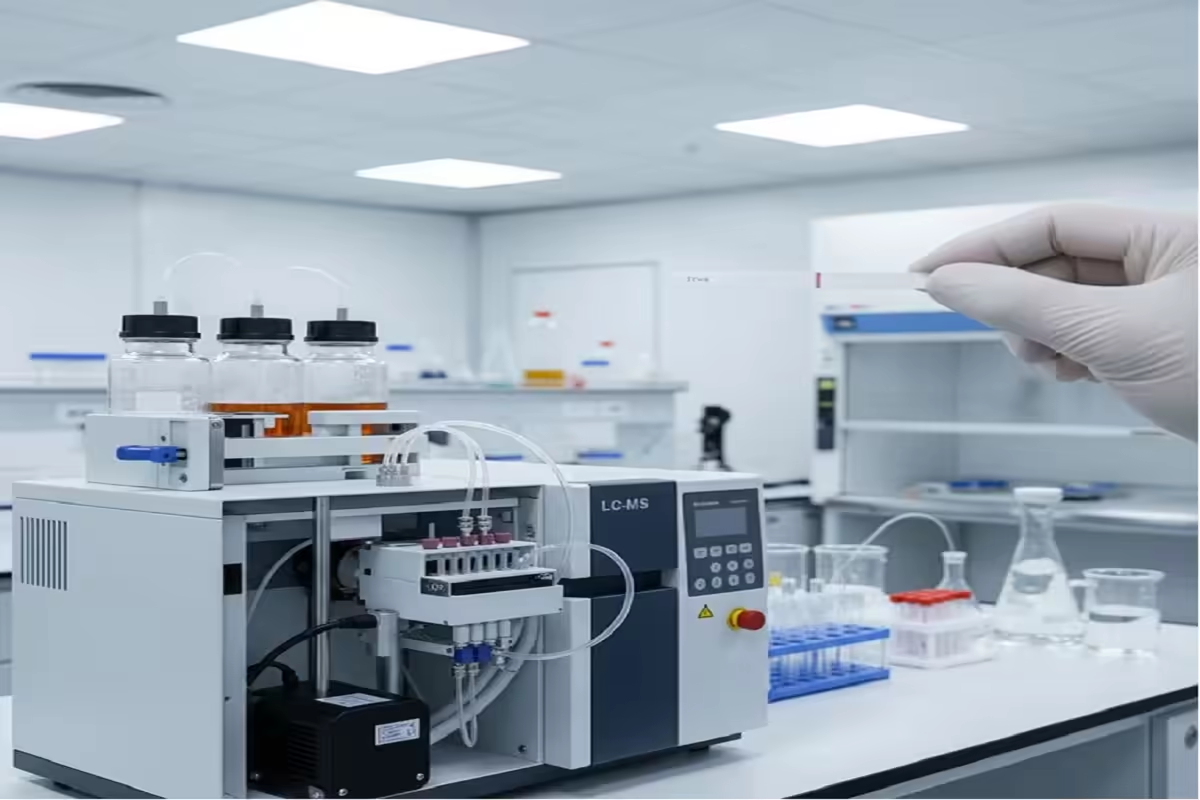
Historically, low-tier markets faced issues with synthetic industrial dyes (e.g., Metanil Yellow in turmeric, Sudan Dyes I-IV in chili powders) added to mask low raw material quality. STOXXNOW addresses this risk by utilizing High-Performance Liquid Chromatography (HPLC) and Thin-Layer Chromatography (TLC) to inspect raw material batches before processing, completely preventing non-compliant dyes from entering the production line.
B. Heavy Metal Mitigation Strategies
Plants naturally absorb trace minerals from soil. However, regulatory frameworks enforce strict limits on heavy metals such as Lead (Pb), Arsenic (As), Cadmium (Cd), and Mercury (Hg). Using Inductively Coupled Plasma Mass Spectrometry (ICP-MS), our quality control team tests raw lots down to parts-per-billion (ppb) levels, ensuring total compliance with destination market import rules.
C. Mycotoxin and Aflatoxin Management
In warm, humid harvesting regions, improper drying can foster fungal growth, leading to toxic secondary metabolites like Aflatoxins (B1, B2, G1, G2) and Ochratoxin A (OTA). STOXXNOW controls this through mechanized solar dryers at origin, strict farm-gate moisture monitoring (<10%), and continuous air-conditioned storage prior to shipment.
Related Reading: Quality Control Benchmarks for Bulk Pulse Exports .
Predicting Global Demand Shifts for Pulses & Grains .
5. Regulatory Compliance and Strategic Export Documentation
Successfully navigating international customs requires thorough documentation and verifiable quality records. A single missing health certificate or analytical test log can result in costly container quarantines at major destination ports.
To ensure smooth clearance through customs clearance checkpoints worldwide, every export batch handled by STOXXNOW is shipped with a comprehensive quality dossier:
- Spices Board Quality Certificate: Official export authorization verifying compliance with mandatory hygiene, grading, and physical purity parameters.
- Certificates of Analysis (CoA): Comprehensive testing logs issued by ISO/IEC 17025 accredited third-party laboratories detailing micro-biological limits, heavy metal analysis, pesticide residue screening (covering 200+ active chemistry profiles), and mycotoxin levels.
- Phytosanitary Certification: Official documentation issued by national plant protection agencies verifying shipments are free from quarantine pests and agricultural diseases.
- Geographical Indication (GI) Verification: Origin proof verifying authentic regional lineages—such as Alleppey Finger Turmeric, Malabar Black Pepper, or Guntur Sanam Chili—guaranteeing authentic flavor profiles and intrinsic value.
6. The Future of Agricultural Trade: Traceability & Sustainable Sourcing
As international supply chains evolve, enterprise buyers increasingly require total visibility into farm-level sourcing practices. STOXXNOW is actively committed to sustainable procurement, fair farm-gate pricing, and direct agricultural extension support for regional farming cooperatives.
By combining direct farm-level partnerships, advanced cryogenic processing technology, and strict quality verification, STOXXNOW delivers pure, aromatic Indian spices that consistently meet the world’s most demanding commercial standards.