
How Smart Farming Technologies Enhance Crop Quality for Export
The global agricultural trade landscape is undergoing a systemic paradigm shift. Across international borders, regulatory bodies, commercial buyers, and end consumers are demanding unprecedented levels of crop uniformity, physical integrity, and bio-security. Historically, agricultural exports relied heavily on post harvest sorting, manual grading, and retroactive quality controlmethods that were inherently inefficient and prone to high reject rates at destination terminals. Today, the integration of smart farming technologies is revolutionizing how crops are cultivated, harvested, preserved, and prepared for global cross-border distribution.
Precision agriculture toolssuch as Internet of Things (IoT) soil moisture sensor grids, localized climate micro-stations, autonomous multispectral drone arrays, and automated variable-rate fertigation systemsallow modern agricultural producers to monitor and optimize crop conditions in real time. By replacing traditional empirical guesswork with granular, data-driven cultivation frameworks, export-focused farming networks produce uniform, high-grade yields that consistently satisfy the strict statutory import standards set by international markets.
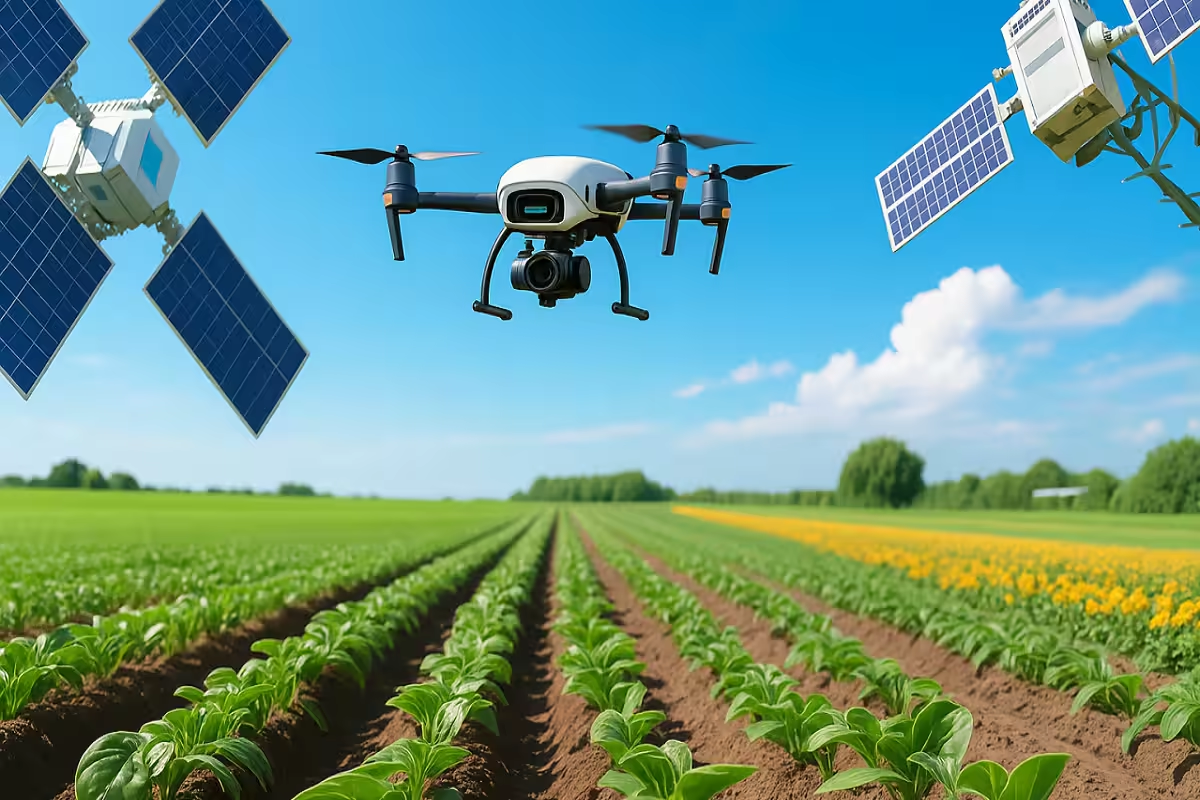
At STOXXNOW, my years spent managing global bulk commodity supply chains have repeatedly demonstrated a fundamental trade reality: international trade leaves zero margin for inconsistent output. Commercial import syndicates across North America, the European Union, and East Asia enforce stringent, non-negotiable threshold parameters regarding kernel density, moisture variance, mycotoxin presence, and pesticide chemical residues. Implementing smart AgTech architectures directly across our supplier farm networks ensures that agricultural outputs maintain top-tier physical and bio-chemical specifications long before the harvest machinery enters the field.
1. The Economics of Quality in International Grain and Produce Trade
To understand the necessity of precision cultivation, one must analyze the commercial penalties associated with non-standardized produce in international shipping. When a bulk carrier carrying 50,000 metric tons of grain arrives at a foreign discharge port, representative samples are extracted and analyzed immediately. A variance of just 1.5% above the contractually stipulated moisture content can result in severe financial penalties, mandatory dockside re-conditioning, or complete rejection of the shipment by port customs authorities.
Beyond moisture, international grain buyers categorize cargo based on physical density (test weight), broken kernel percentages, foreign material (FM) content, and foreign seed contamination. Traditional farming systems often produce field-level micro-variances, where crops grown on high-slope or poor-drainage acreage yield smaller, weaker grains than those grown in prime soil sectors. When blended into bulk storage units, these inconsistent yields drag down the average quality grade of the entire shipment, transforming what could have been Premium Grade 1 cargo into discounted feed-grade material.
| Export Quality Metric | Traditional Farming Variance | Smart AgTech Precision Standard | Impact on International Export Value |
|---|---|---|---|
| Moisture Content Variance | ± 3.5% across field zones | ± 0.4% across field zones | Eliminates cargo spoilage and dockside drying penalties. |
| Physical Kernel Uniformity | 68% - 75% uniform sizing | 92% - 97% uniform sizing | Maximizes commercial milling yield and processing throughput. |
| Pesticide Residue (MRL Compliance) | High risk of localized over-concentration | Zero-overages via targeted spot-application | Guarantees clearance through strict EU and Japanese port controls. |
| Mycotoxin / Mold Contamination | Sporadic outbreaks in unmonitored zones | Near-zero due to real-time microclimate alerts | Prevents complete consignment quarantine and destruction orders. |
2. IoT Field Sensor Networks and Sub-Surface Soil Optimization
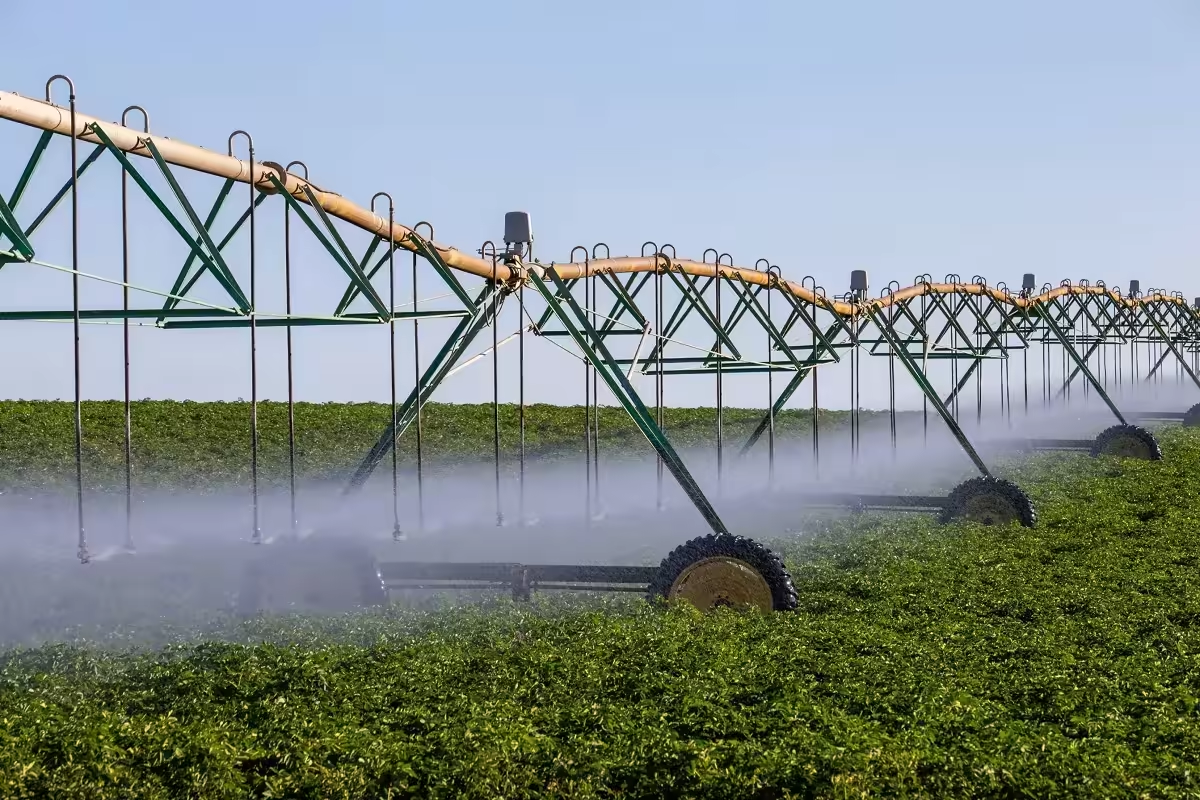
The core foundational layer of smart cultivation is the deployment of localized Internet of Things (IoT) sensor architectures. Low-Power Wide-Area Network (LPWAN) protocolssuch as LoRaWAN and NB-IoT allow hundreds of low-maintenance, solar-assisted sensor nodes to be distributed across vast commercial acreage. These units continuously stream real-time environmental metrics back to central farm management dashboards:
- Volumetric Soil Water Content (VSWC): High-frequency Time-Domain Reflectometry (TDR) probes measure root-zone moisture at multi-depth intervals (e.g., 15cm, 30cm, and 60cm). By integrating this data with automated drip or center-pivot irrigation systems, water is applied precisely when and where the plant requires it. This eliminates localized waterlogging a primary cause of root-rot pathogen propagation and prevents water stress during critical flowering and grain-filling development phases.
- In-Situ NPK Chemical Telemetry: Ion-selective field sensors track active nitrogen (N), phosphorus (P), and potassium (K) drawdown dynamically. Instead of relying on static pre-season soil tests, growers receive daily updates on soil nutrient depletion, enabling micro-dosed fertigation that satisfies plant nutritional demands without applying excess chemical compounds that leech into groundwater.
- Micro-Climate Canopy Sensors: Sensors deployed directly within the crop canopy continuously log micro-ambient temperature, leaf wetness duration, and relative humidity. These three parameters form the backbone of predictive fungal disease modeling (such as predicting *Fusarium* head blight in wheat or *Aspergillus* in maize).
"Precision soil moisture management is not merely about water conservation it is the direct controller of grain kernel density and cellular structural integrity required to survive trans-oceanic shipping."
3. Multispectral Aerial Mapping and Targeted Input Management
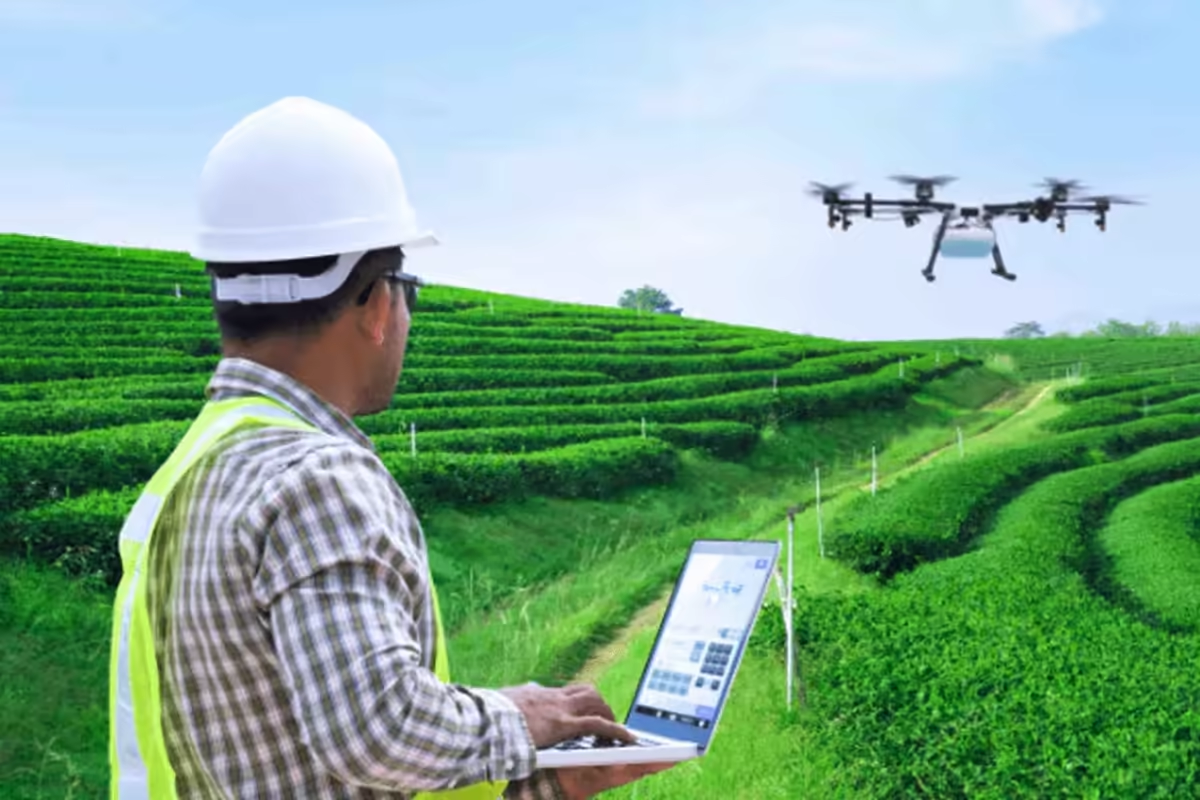
While ground sensors provide deep contextual data at discrete geographical points, autonomous aerial drones and low-Earth-orbit (LEO) satellite imagery provide broad spatial coverage across thousands of hectares. Equipped with high-resolution multispectral cameras, these systems capture light reflectances outside the visible spectrum, specifically within the Near-Infrared (NIR) and Red Edge bands.
Vegetation Indices in Export Agriculture
By computing specific vegetation indices most notably the Normalized Difference Vegetation Index (NDVI) and the Normalized Difference Red Edge (NDRE) farm management software generates color-coded spatial health maps of the crop canopy. Healthy, photosynthetic-dense vegetation reflects high levels of NIR light while absorbing visible red light. Conversely, crops experiencing sub-clinical cellular stress caused by early pest infestations, nutrient deficiencies, or soil salinity exhibit distinct shifts in NIR reflection long before physical wilting or chlorosis becomes visible to the human eye.
This early detection capability enables precision variable-rate application (VRA). Instead of applying blanket chemical treatments across an entire 500-hectare sector, automated spray drones or tractor booms execute targeted spot-treatments strictly over impacted field coordinates. This approach yields two major structural benefits for export strategy:
- Chemical Expense Reduction: Synthetic pesticide and fungicide consumption is reduced by up to 60% to 75%, lowering production overhead.
- MRL Compliance Security: Minimizing synthetic chemical interventions ensures that harvest consignments consistently fall well below the Maximum Residue Limits (MRL) enforced by regulatory bodies such as the European Food Safety Authority (EFSA) and the US FDA.
Data Flow Architecture in Smart Export Farming
4. Standardizing Grain Density, Milling Performance, and Physical Integrity
For industrial food processing facilities in importing nations, raw material consistency is paramount. Commercial flour mills, oilseed crushing plants, and pulse processors operate high-speed automated machinery calibrated to precise physical dimensions and hardness scales. Variances in grain size cause uneven tempering, elevated breakage rates during de-hulling, reduced starch extraction yields, and excessive mechanical downtime.
Smart farming technologies resolve these industrial bottlenecks at the biological source. By standardizing water and nutrient distribution across heterogeneous topographies, crop populations develop at perfectly synchronized rates. The resulting harvest yields uniform kernel size distribution, consistent test weights (kilograms per hectoliter), and standardized protein-to-starch ratios.
Furthermore, structural physical integrity plays a massive role during maritime transit. Bulked agricultural commodities stored inside deep ship holds experience intense static pressure, vibration, and thermal shifts during 30-to-45-day ocean voyages. Grains with weak cellular walls due to erratic late-season watering fracture under this pressure, creating excessive fine dust particles. Excess dust restricts aeration airflow through the cargo hold, encouraging localized heat buildup, moisture migration, and subsequent mold outbreaks. High-density, uniformly developed grains produced via precision farming withstand mechanical handling and long-duration maritime transport with minimal physical degradation.
5. Digital Traceability, Blockchain Ledger Systems, and ESG Compliance
In modern international commerce, physical crop quality represents only half of the value equation; verified data provenance represents the other. Global buyers, retail conglomerates, and institutional financiers increasingly enforce strict Environmental, Social, and Governance (ESG) compliance frameworks. Importers require verifiable proof that agricultural commodities were produced sustainably, without illegal deforestation, without water source depletion, and within regulated chemical safety guidelines.
Smart Farm Management Information Systems (FMIS) solve this verification requirement by automatically generating immutable digital audit trails for every crop cycle. Key operational data points such as GPS-stamped planting records, automated irrigation logs, drone surveillance maps, variable-rate fertilizer application records, and harvest dates are cryptographically bound to specific batch numbers.
Implementation of QR-Coded Batch Certificates
When STOXXNOW prepares export consignments, these digital records are aggregated into QR-coded batch certificates linked directly to ocean shipping documentation (Bills of Lading, Phytosanitary Certificates, and Certificates of Origin). Port inspectors, customs brokers, and quality assurance teams at destination terminals can scan these codes to view the complete agronomic history of the shipment.
- Streamlined Customs Clearance: Transparent, instantly accessible digital documentation significantly reduces physical customs holds and laboratory testing delays at port entry points.
- Premium Market Positioning: Fully traceable, environmentally documented crop shipments command premium price margins over non-traceable bulk commodities in discerning markets such as Japan, South Korea, Switzerland, and the European Union.
- Rapid Defect Isolation: In the rare event of a quality discrepancy, digital batch records allow supply chain managers to trace the issue back to a specific farm sector, preserving the integrity and reputation of the broader export pool.
6. Post-Harvest Smart Handling and Cold Chain IoT Monitoring
The application of smart technology does not terminate at field harvest. The transition from field to export storage facilities represents a vulnerable operational window where crop quality can degrade rapidly if ambient conditions are not carefully controlled. Smart post-harvest monitoring systems bridge the gap between harvest and international ocean transit.
Automated grain silos and temperature-controlled storage warehouses are now routinely fitted with internal IoT sensor cables that continuously monitor internal temperature, relative humidity, carbon dioxide levels, and insect activity. Carbon dioxide sensors, for example, serve as an early-warning indicator for hidden insect infestations or localized microbial spoilage long before temperature spikes become detectable by traditional sensors. By automatically triggering aeration fans or climate control units upon detecting micro-climatic shifts, post-harvest systems lock in the high crop quality achieved during the cultivation phase.
Related Reading: Partnering directly with local farmers ensures full origin traceability, lowers procurement costs and supports sustainable farming communities .
Modern food importers expect clear origin tracking. Recording harvesting and processing batches builds trust with international commercial buyers .
Conclusion: The Strategic Advantage of AgTech Integration
As climate volatility, global supply chain complexities, and international regulatory scrutinies intensify, traditional agricultural methods are no longer sufficient to maintain competitive export operations. The integration of IoT sensor networks, multispectral aerial analytics, variable-rate precision inputs, and digital traceability systems transformed crop quality management from a reactive post-harvest sorting process into a proactive biological manufacturing framework.
By deploying these advanced AgTech solutions across our partner producer networks, STOXXNOW delivers clean, physically uniform, fully traceable, and premium-grade agricultural commodities that consistently exceed international trade standards. Through technology-driven precision, we bridge the gap between sustainable domestic farming and the stringent demands of global trade, securing a reliable, high-value agricultural supply chain for international markets worldwide.