
Shifting Dynamics in the Global Rice Export Market: Trade Policies, Processing, and Sourcing Strategies
As a foundational staple food feeding over half of the world's population, rice occupies a unique place in global agriculture trade. Because it plays a vital role in national food security, the cross-border rice trade is sensitive to trade policy changes, government intervention, export tariffs, and climate-driven yield variations. For export houses and international distributors, navigating this complex landscape requires an adaptable sourcing strategy and deep processing expertise.
Over the past several trade cycles, shifting government policies such as minimum export pricing (MEP), tariff updates, and temporary export quotas have forced international buyers to frequently adjust their sourcing networks. In this market overview, I analyze how trade policy shifts, regional preference variations, and modern milling technologies shape global trade in Basmati and Non-Basmati rice varieties.
Executive Summary & Key Takeaways
- Policy Sensitivities: National food security policies regularly induce price volatility through tariffs, export bans, and Minimum Export Prices (MEP).
- Market Bifurcation: The global market is divided between high-value aromatic varieties (Basmati, Jasmine) and high-volume staple grains (Parboiled and White Rice).
- Technology Imperative: Multi-stage optical sorting and computerized de-hulling directly control profitability by curbing broken grain percentages.
- Climate Resilience: Sustainable cultivation methods like SRI and DSR are essential to insulate supply chains against severe weather anomalies.
1. Navigating Geopolitical Policies and Tariff Structures
The global trade in rice differs significantly from freely traded commodities like soybeans or corn. Major exporting nations regularly adjust trade rules to protect domestic price stability during high-inflation periods. Understanding these policy instruments is fundamental for procurement officers seeking to de-risk their supply contracts.

Minimum Export Prices (MEP)
Setting baseline floor prices for premium varieties like long-grain aromatic Basmati prevents under-invoicing while maintaining premium brand positioning in global markets. When governments institute or adjust MEP levels, foreign buyers must re-evaluate contract viability instantly. High MEP thresholds safeguard domestic availability by dampening aggressive outward flows, but they can temporarily pricing out cost-sensitive import destinations.
Export Duty Adjustments and Tariffs
Imposing or removing variable export tariffs (such as 20% duties on parboiled or non-basmati white rice) rapidly shifts price competitiveness across global buyer markets in Africa, the Middle East, and Southeast Asia. When a dominant market participant imposes an export tax, trade channels reroute almost overnight toward secondary suppliers in Vietnam, Thailand, Pakistan, or Myanmar, triggering rapid price adjustments across global exchanges.
Strategic Grain Reserves & Procurement Targets
Changes in government procurement targets directly impact the volume of commercial grain available for international trade, making multi-region sourcing partnerships essential for exporters. National stockpiling initiatives during uncertain climate windows lock in significant portions of annual yields, leaving international traders to compete for tighter exportable surpluses.
2. Segmenting Regional Demand: Basmati vs. Non-Basmati Varieties
Success in global rice distribution depends on aligning specific processing standards with regional market requirements. The structural and chemical composition of different grain varieties dictates their culinary behavior, storage life, and transport preferences.
| Variety Category | Primary Target Markets | Key Quality Characteristics | Processing Requirements |
|---|---|---|---|
| Aromatic Basmati (1121, Pusa, Traditional) | Middle East (GCC), Europe, North America | Extreme grain elongation, distinct aroma, non-sticky texture, low chalkiness. | Aged raw paddy (12-24 months), multi-stage polishing, precision optical sorting. |
| Parboiled Non-Basmati | West Africa, East Africa, Caribbean | High nutritional retention, durable kernel, firm texture, long shelf-life. | Paddy soaking, high-pressure steaming, controlled drying prior to de-husking. |
| White Non-Basmati (5%, 25% Brokens) | Southeast Asia, Sub-Saharan Africa | Cost-effective, quick cooking, variable kernel length, high volume utility. | Standard mechanical de-husking, basic grading, controlled kernel blending. |
| Jasmine & Medium Grain | East Asia, North America, Specialized Retail | Subtle floral aroma, soft & slightly sticky texture upon cooking. | Gentle milling to retain natural aromatic oils, moisture-controlled packaging. |
Middle Eastern & Western Markets (Aromatic Basmati)
European and Gulf buyers demand long-grain Basmati varieties (such as 1121 and Pusa) known for significant elongation during cooking, distinct aroma, zero chalkiness, and strict purity ratings (95%+ grain length consistency). Ageing raw Basmati paddy for up to two years prior to milling reduces moisture content, concentrates natural flavors, and hardens the starch structure, enabling the grain to expand to double its dry length without bursting during culinary preparation.
African Trade Corridors (Parboiled Non-Basmati)
Buyers across West and East Africa prioritize long-grain parboiled rice. The parboiling process soaking, steaming, and drying raw paddy before milling drives nutrients into the endosperm, hardens the grain against breakage, and improves shelf-life in warm climates. Parboiled grains resist insect infestation and dampness far more effectively than untreated raw white rice, making them uniquely suited for long maritime transits and extended warehousing in tropical regions.
3. Modern Industrial Milling and Optical Sorting Innovations
Converting raw field paddy into clean consumer-grade rice requires advanced multi-stage industrial milling. Minimizing broken grain percentages is critical to profitability, as a 2% increase in broken grains can drop a shipment's commercial grade and lower contract margins.
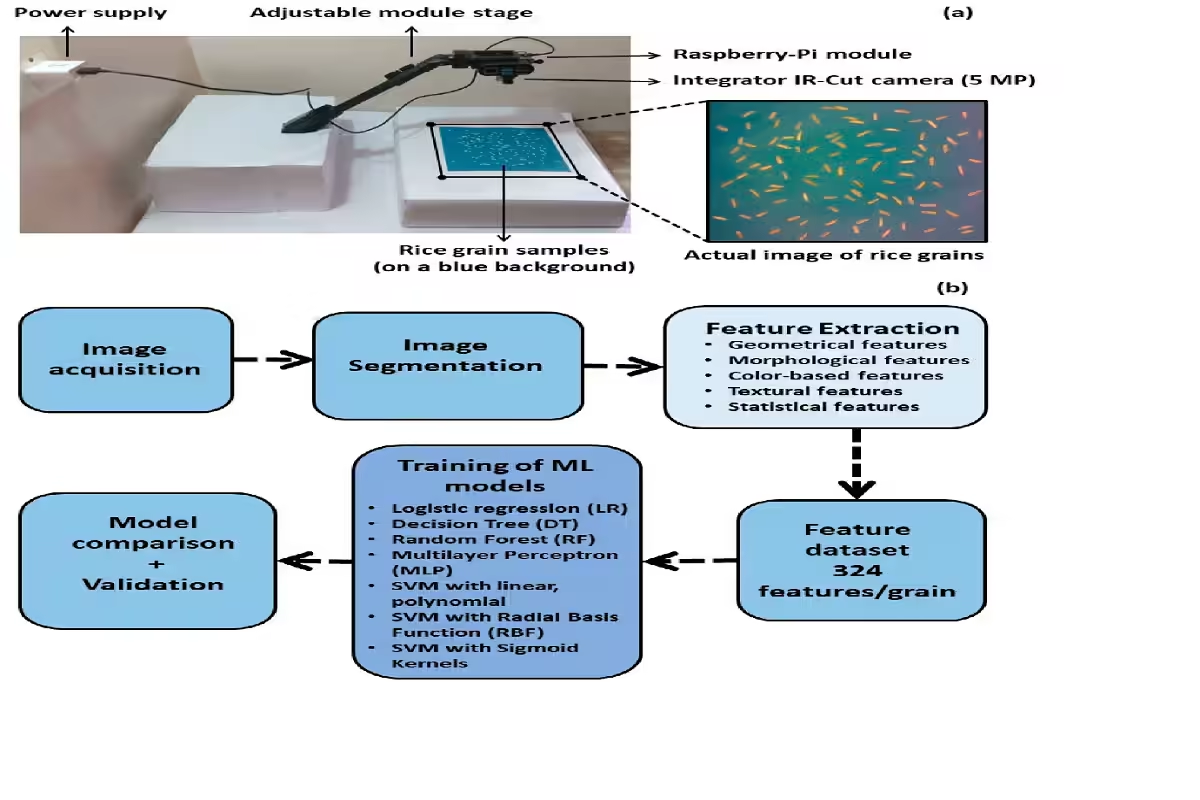
Modern milling centers utilize computerized de-hulling, multi-stage water polishing, and high-resolution optical sorting cameras. Advanced multispectral sorters process tons of grain per hour, identifying and ejecting discolored kernels, yellowed grains, and chalky seeds with pinpoint accuracy.
The Multi-Stage Processing Pipeline
- Cleaning & Pre-Cleaner Operations: High-capacity vibrating sieves, magnetic separators, and de-stoners remove field debris, straw, metals, and gravel to protect downstream machinery.
- Rubber-Roll De-Husking: Precision clearance between counter-rotating rubber rollers gently strips the outer husk from the paddy without shattering the brown rice grain inside.
- Whitening & Abrasive Polishing: Sequential abrasive wheels remove the outer bran layers. Controlled mist polishing smooths the surface, bestowing a bright, pearlescent finish.
- Length Grading & Thickness Separation: Indented cylinders and sizing screens isolate head rice from broken fragments, organizing output according to strict contract specs.
- Multispectral Color Sorting: High-speed cameras analyze every individual grain in freefall, utilizing monochromatic, chromatic, and infrared spectra to eliminate non-conforming seeds and foreign matter.
4. Climate-Resilient Sourcing and Sustainable Agriculture
Weather variations, changing monsoon patterns, and water scarcity across primary growing regions present ongoing challenges to annual harvest yields. To protect supply stability, leading trade companies encourage sustainable farming practices such as the System of Rice Intensification (SRI) and direct-seeded rice (DSR) cultivation.
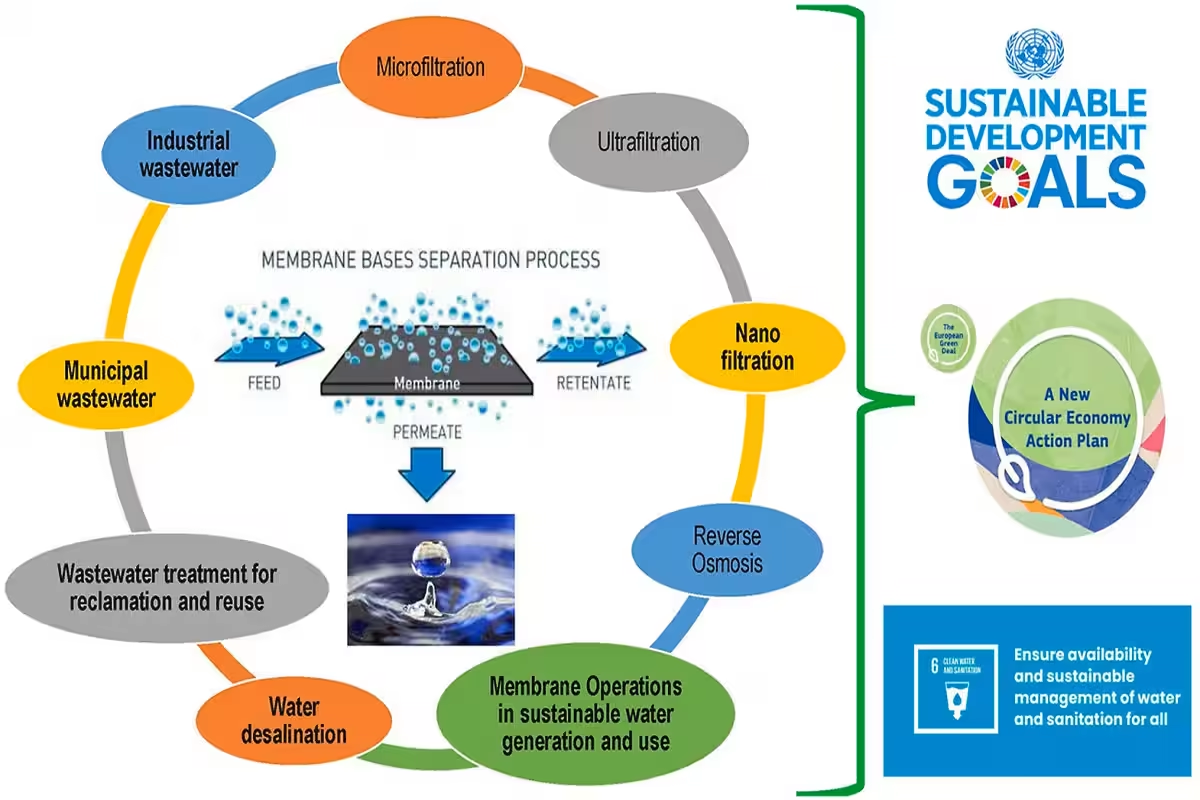
These eco-friendly growing methods cut water usage by up to 30%, lower methane emissions, and improve grain strength during milling. By building diversified sourcing networks across multiple agricultural belts, STOXXNOW guarantees consistent grain volumes and reliable quality for our international partners regardless of regional climate shifts.
Direct-Seeded Rice (DSR) vs. Traditional Transplanting
Traditional rice farming relies on continuous nursery flooding and transplanting young seedlings into puddled fields a practice that consumes vast quantities of groundwater and generates greenhouse gases through anaerobic soil conditions. Direct-Seeded Rice (DSR) technology circumvents transplanting by sowing seeds directly into well-prepared soil via tractor-drawn machinery. DSR drastically reduces labor inputs, conserves water resources, reduces land preparation costs, and matures up to ten days earlier, protecting crops from late-season climate volatility.
The System of Rice Intensification (SRI)
SRI methodology focuses on altering crop management techniques rather than introducing expensive external inputs. By planting younger, single seedlings with wider spacing and implementing Alternate Wetting and Drying (AWD) irrigation schedules, farmers stimulate root growth and plant vigour. The resulting rice stalks possess thicker stems and deeper root networks, rendering them far more resistant to severe wind events, lodging, and transient drought spells.
Related Reading: Meeting international phytosanitary rules is essential for smooth ocean freight deliveries. Here is how proper documentation prevents delays at destination ports .
Moisture sensors, drip irrigation, and soil monitoring tools help local farmers grow uniform crops that meet strict export buyer specifications .
5. Strategic Recommendations for Global Commodity Procurement
For international buyers, corporate import procurement teams, and regional distributors, navigating the modern trade ecosystem requires moving beyond opportunistic spot purchasing. Implementing resilient long-term procurement frameworks is the most effective approach to buffer operations against global market shocks.
- Geographic Sourcing Diversification: Avoid concentrating contract pipelines within a single export hub. Distribute purchase orders across multiple growing geographies to insulate supply lines against localized export tariffs or regional weather disruptions.
- Flexible Contract Structuring: Utilize indexed pricing models and forward currency hedging strategies to absorb exchange rate fluctuations and sudden policy shifts like Minimum Export Prices.
- Quality Verification at Source: Partner exclusively with processing houses that hold recognized international certifications (ISO 22000, HACCP, BRCGS) and employ third-party pre-shipment inspections (e.g., SGS, Bureau Veritas) to verify moisture, purity, and broken ratios before port loading.
- Direct Processing Engagement: Establish direct relationships with integrated milling enterprises like STOXXNOW that manage end-to-end processing from sustainable farm sourcing to precision optical sorting and port logistics.
In conclusion, while trade policy adjustments and environmental pressures present real operational complexities, they also open substantial opportunities for traders equipped with market intelligence, modern processing infrastructure, and diversified supply chains. By prioritizing processing precision and sustainable farming partnerships, international distributors can maintain reliable grain pipelines regardless of shifts in the broader trade landscape.