
Positioning Millets as the Ultimate Global Superfood: Supply Chain and Market Strategy
Over the past decade managing global export corridors, I have witnessed a fundamental shift in how international food buyers view ancient grains. For generations, millets like Sorghum, Pearl Millet (Bajra), Finger Millet (Ragi), and Foxtail Millet were categorized purely as regional staples or minor forage crops. Today, however, these robust grains are stepping into the global spotlight as premium functional superfoods. Driven by rising consumer demand for clean-label, gluten-free nutrition and severe climate disruptions affecting traditional crops like wheat and rice, millets are rapidly becoming a cornerstone of sustainable agribusiness.
Moving millets from local agrarian hubs into high-value Western retail markets requires more than standard trade logistics. It demands a deep understanding of crop resilience, specialized post-harvest technology, and precise alignment with international food safety frameworks. In this strategic overview, I will break down how we at STOXXNOW position millets to meet global quality standards, navigate complex trade logistics, and capitalize on expanding consumer sectors across Europe, North America, and the Middle East.
The Agronomic Advantage: Climate Resilience Meets Commercial Economics
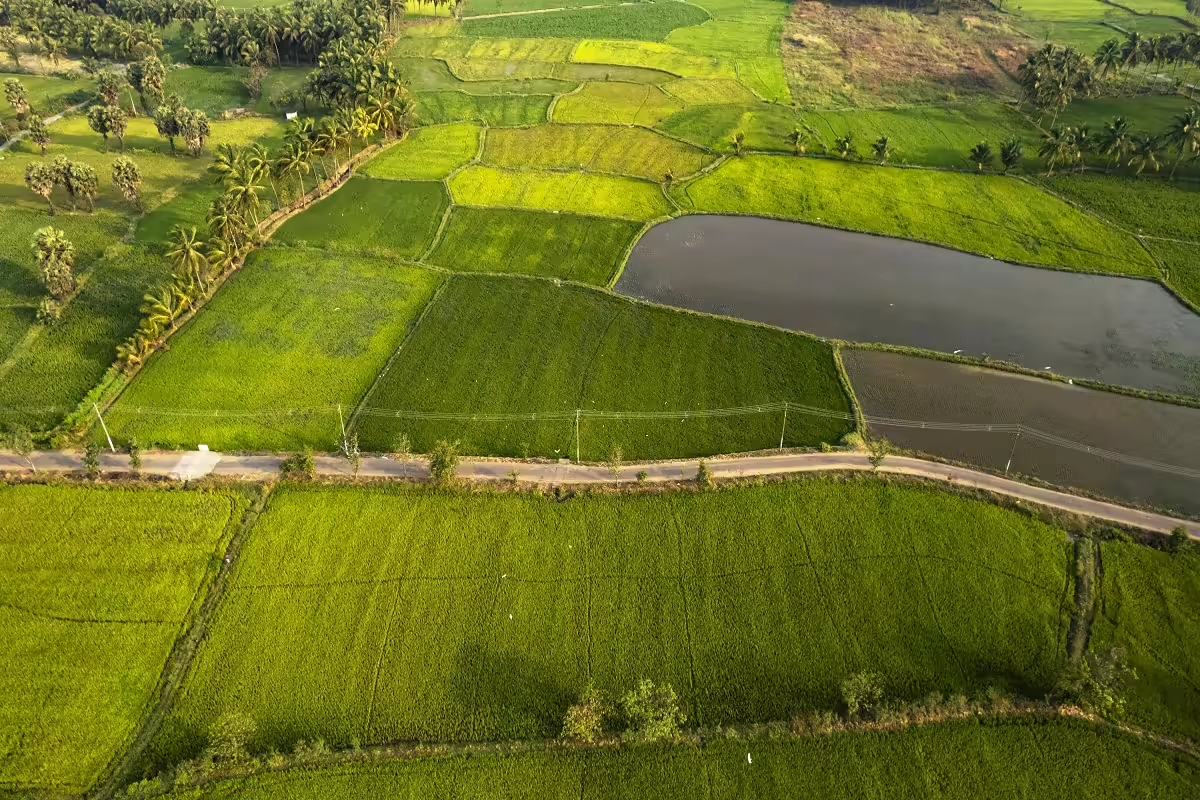
To understand why global buyers are turning toward millets, we must look at the environmental realities facing modern farming. Conventional grain staples require extensive irrigation, chemical input, and highly predictable weather patterns. In contrast, millets are naturally engineered to thrive under harsh climatic conditions:
- Minimal Water Footprint: Pearl and Sorghum varieties require roughly 70% less water than paddy rice throughout their lifecycle, making them an ideal crop for arid and semi-arid cultivation zones.
- Short Growth Cycles: Most millet varieties mature within 60 to 90 days, enabling flexible crop rotations and reducing long-term exposure to regional drought cycles.
- Low Input Requirement: Naturally resistant to many common pests, millets grow efficiently with minimal synthetic fertilizers, creating a clear pathway toward organic certification.
From an export perspective, these natural characteristics translate directly into lower baseline production costs and greater supply predictability. As corporate ESG (Environmental, Social, and Governance) targets become stricter for major food conglomerates, sourcing ingredients with a provably low carbon and water footprint gives millet suppliers a significant commercial edge.
Comparative Analysis of Resource Utilization
When evaluating staple grains for future industrial procurement, agricultural economists look closely at resource efficiency metrics. The table below outlines a comparative breakdown of water consumption and maturation timelines across primary cereal crops:
| Cereal Crop | Average Water Requirement (mm) | Crop Maturity Cycle (Days) | Drought Tolerance Index |
|---|---|---|---|
| Paddy Rice | 1,200 – 2,500 | 120 – 150 | Low |
| Wheat | 450 – 650 | 110 – 130 | Moderate |
| Pearl Millet (Bajra) | 350 – 500 | 65 – 90 | Very High |
| Finger Millet (Ragi) | 400 – 550 | 90 – 110 | High |
Nutritional Profiling and Commercial Food Applications
The global demand for millets is anchored in three rapidly growing food industries: gluten-free manufacturing, low-glycemic functional foods, and ready-to-eat healthy snacks. Food scientists and brand managers are increasingly replacing modified starches with clean-label millet flours to improve both nutritional claims and product performance.
Finger millet (Ragi), for instance, provides exceptional native calcium levels (up to 344mg per 100g), far outstripping conventional wheat or corn. Pearl millet offers a dense source of bioavailability-tested iron and zinc, addressing critical micronutrient needs in functional food blends. Furthermore, because all millet varieties possess a low Glycemic Index (GI) and a high proportion of resistant starch, they are ideally suited for specialized dietary products aimed at managing metabolic wellness and diabetes.
In practice, commercial bakeries utilize pre-gelatinized millet starches to improve dough elasticity in gluten-free breads, while extruder manufacturers rely on uniform grain sizing to create crispy, nutrient-dense breakfast cereals and puffed snacks. Sourcing uniform, high-purity raw material is essential to preventing equipment downtime and maintaining consistency on automated production lines.
Overcoming Post-Harvest Challenges and Logistics Hurdles
While the market potential is vast, handling millets for long-haul international shipping requires rigorous quality control. The primary vulnerability in millet processing is lipolytic degradation. Once the outer seed coat is de-hulled, natural enzymes begin breaking down internal fats, which can lead to off-flavors or rancidity if the moisture levels and ambient conditions are not carefully managed.
To overcome these processing challenges, our operations focus on three non-negotiable operational standards:
- Precision De-Hulling & Color Sorting: Utilizing optical sorters to achieve 99.5%+ purity, removing foreign seeds, unhulled grains, and physical debris before packaging.
- Moisture Calibration: Ensuring raw grain moisture is stabilized strictly between 10% and 12% prior to stuffing into shipping containers, preventing thermal sweating during oceanic transit.
- Hermetic Protective Packaging: Deploying multi-layer inner liners or modified atmosphere bags to shield bulk shipments from atmospheric moisture and oxygen exposure.

Navigating International Compliance and Market Positioning
Unlocking premium export pricing requires strict adherence to importing country standards. European and American regulatory bodies enforce extremely tight Maximum Residue Limits (MRLs) for pesticides and heavy metals, along with zero-tolerance policies for specific storage molds and aflatoxins.
At STOXXNOW, we maintain complete supply chain traceability from farm-level procurement to final bill of lading. By establishing standardized testing protocols at every stage, we provide our global partners with fully documented, high-purity agricultural products that pass international customs audits without delay.
Related Reading: Understanding Organic Certification Steps for Food Exporters .
Handling and Transporting Oilseeds for Commercial Export .
Building Long-Term B2B Partnerships in Agro-Commodities
Expanding the global footprint of ancient grains extends beyond spot-market transactions. Importers and food manufacturers seek reliable, year-round availability backed by stable pricing mechanisms and verifiable sustainability certificates. By establishing direct contracts with farmer producer organizations (FPOs) and investing in decentralized storage infrastructure, trade houses can mitigate price volatility while guaranteeing fair compensation to primary producers.
As consumer demand for authentic, nutrient-dense superfoods continues to surge, millets are proving to be far more than a temporary market trend. They represent a sustainable, resilient, and economically viable foundation for the future of global food production. Through dedicated processing investments and transparent trade practices, we are proud to lead the integration of these ancient grains into modern international supply chains.